Table of Contents
ToggleFinding the right pest control spray can feel overwhelming when you’re staring down a cabinet full of options at the hardware store. Whether you’re dealing with ants marching through your kitchen, roaches lurking in dark corners, or spiders claiming the garage, choosing the best home pest control spray depends on the pest, your family’s safety concerns, and how severe the infestation is. This guide breaks down what’s actually effective, what’s safe to use around kids and pets, and how to apply sprays the right way so they actually work.
Key Takeaways
- The best home pest control spray depends on identifying the specific pest, assessing infestation severity, and matching the product’s active ingredients to your target problem.
- Natural sprays with botanical oils work well for mild infestations and pet-safe environments, while chemical-based sprays deliver faster results for severe roach, ant, or widespread infestations.
- Always read the entire product label for safety information, reentry times, and target pests before application to ensure effectiveness and protect your family and pets.
- Proper application technique—including surface preparation, light even coats on baseboards and entry routes, and correct timing in the evening—maximizes spray effectiveness and prevents waste.
- Wearing appropriate safety gear (gloves, glasses, respirator), ventilating thoroughly, and never overusing pesticides are essential to prevent toxic exposure while treating your home.
- If DIY pest control sprays fail after multiple attempts, consulting a licensed pest control professional ensures persistent infestations are properly resolved.
Types of Home Pest Control Sprays and What They Treat
Pest control sprays come in two basic delivery systems: aerosol cans and trigger-pump bottles. Aerosol sprays work fast and coat walls and baseboards evenly, but they’re harder to control and waste product. Trigger sprays give you more precision and are better for spot treatments on specific insects or entry points.
Different pests require different active ingredients. Contact sprays kill on impact, great for visible insects you can see and target. Residual sprays create a chemical barrier on surfaces that keeps working for days or weeks, ideal for areas where pests hide or travel. Some products combine both approaches.
Common target pests include ants, roaches, spiders, flies, and occasional invaders like silverfish or centipedes. Identifying exactly what you’re dealing with matters, a spray effective on roaches won’t necessarily work on ants, and vice versa. Look at the label’s pest list before buying. When choosing between solutions, many homeowners research options like biotech pest control approaches to understand the full spectrum of what’s available.
Natural and Organic Pest Control Options
Natural pest sprays work differently than synthetic pesticides. Most rely on botanical oils (peppermint, rosemary, clove) or acidic compounds that disrupt an insect’s nervous system or damage its exoskeleton. They degrade quickly in sunlight and don’t leave lasting residues, which is why many families with young children or pets prefer them.
Products containing neem oil disrupt insect feeding and reproduction but work slowly, expect 5 to 7 days for full effect. Pyrethrin, derived from chrysanthemum flowers, knocks down flying insects quickly and is relatively safe around mammals. Diatomaceous earth (DE) is a powder, not a spray, but it works by creating microscopic cuts on insects’ waxy armor. Food-grade DE is safe to use around kids and pets, though you’ll still want to avoid breathing the dust.
The trade-off: natural sprays usually aren’t as potent or long-lasting as synthetic options. For mild infestations or prevention, they’re solid choices. For heavy roach or ant problems, you might need something stronger. Products carrying the OMRI certification (Organic Materials Review Institute) meet organic standards if that matters for your household.
Chemical-Based Sprays for Severe Infestations
Synthetic pesticides work fast and create longer-lasting barriers. The most common active ingredients in home sprays include pyrethroids (synthetic copies of pyrethrin), neonicotinoids (nicotine-based compounds), and organophosphates (older, stronger chemicals rarely used in home products now).
Pyrethroids like permethrin are the workhorse of home pest control, fast-acting, low mammalian toxicity, and effective on a wide range of insects. Neonicotinoids (imidacloprid is common) work on ants, roaches, and some beetles but are restricted in some regions due to environmental concerns. Always check local regulations before buying.
When dealing with severe infestations, say, a roach problem that’s spread through multiple rooms, chemical sprays often deliver faster results than natural alternatives. But, they require careful use. Resistance can build if the same product is used repeatedly in the same space. Rotating between different active ingredients helps prevent this. Professional-grade products exist, but homeowners can access plenty of effective over-the-counter options. For strategic guidance on managing persistent problems, reviewing resources like do-it-yourself pest control strategies helps you understand when to call in reinforcements.
How to Choose the Right Spray for Your Pest Problem
Start by identifying exactly what pest you’re dealing with. Ants, roaches, spiders, and flies each have different weaknesses. Read the label carefully, it lists every pest the product targets. If your problem isn’t listed, that spray won’t work.
Next, assess severity. A few spiders in the basement? A natural spray or light residual product works. Ants inside walls or roaches in the kitchen? You probably need a stronger chemical-based option with proven residual action.
Consider your household. If you have toddlers crawling on floors or cats grooming baseboards, natural sprays or pet-safe formulations are smarter. Read the label for reentry times (how long you need to keep people and pets out of the area after application) and whether the product requires dilution or is ready-to-use.
Budget matters, but don’t choose based solely on price. A cheaper spray that doesn’t work wastes money and extends the infestation. Mid-range brands from established manufacturers usually offer the best balance of efficacy and value. Check reviews from other homeowners, not just marketing claims. Understanding established solutions like Crown Pest Control approaches helps contextualize what professional-level effectiveness looks like.
Safety Tips When Using Home Pest Control Sprays
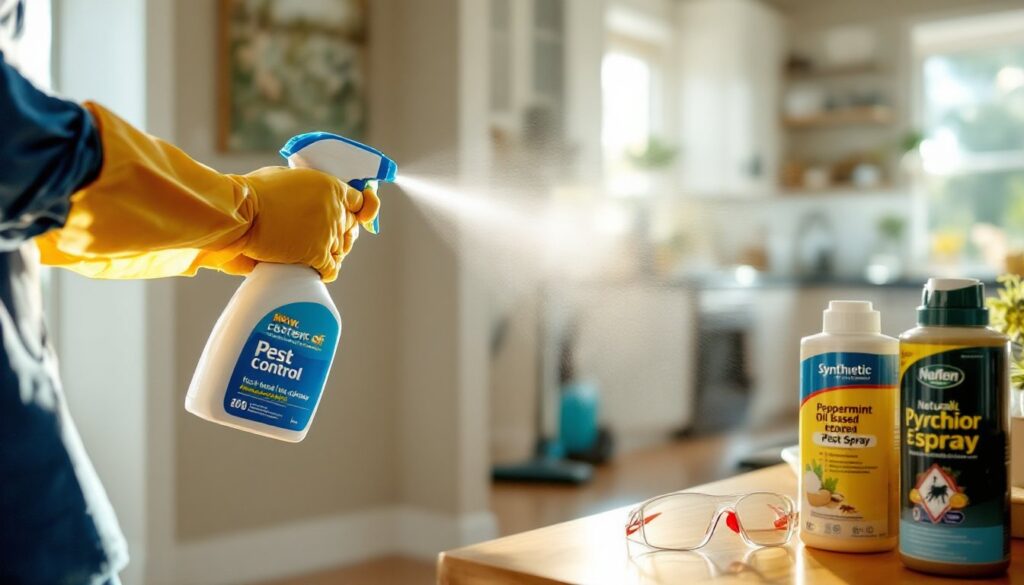
This is non-negotiable: wear nitrile gloves, safety glasses, and a mask or respirator rated for pesticide use, not just a dust mask. Many homeowners skip this and regret it. Pesticides can absorb through skin, and inhalation is a real risk, especially in enclosed spaces.
Ventilate the area well. Open windows and doors, run fans, and stay out while spraying and for the time specified on the label. Don’t spray on food prep surfaces unless the label explicitly says it’s safe for that use. Never spray directly on pets or bedding unless labeled for that specific use.
Store sprays in their original containers in a cool, dry place away from kids and pets. Many poisoning incidents happen when containers are transferred to unmarked bottles. If you have pets, research whether the product is pet-safe before use. Some sprays are fine once dry: others require keeping animals out for hours.
Read the entire label, not just the front. It contains critical safety information, dilution ratios, and reapplication windows. Overusing a spray doesn’t kill pests faster: it just increases toxic exposure for your family. External resource like Good Housekeeping’s spider repellent reviews provide insights into tested safety profiles of popular products.
Application Techniques for Maximum Effectiveness
Surface prep makes or breaks spray effectiveness. Vacuum and wipe down baseboards, corners, and cracks before spraying. Dead skin cells, pet hair, and dust reduce contact between the spray and insects. For trigger sprays, hold the nozzle 6 to 8 inches from the surface and apply thin, even coats along baseboards where ants and roaches travel.
Don’t oversaturate. A wet, dripping surface doesn’t work better than a light, even coating. In fact, excess spray dries slower, extending reentry times and potentially damaging surfaces. Aerosol cans require short bursts, 3 to 5 seconds per section. Move the can steadily to avoid pooling.
Target high-traffic routes. Ants follow chemical trails laid down by scouts: spray along those paths. Roaches hide in cracks and crevices: inject spray into gaps where they shelter. For spiders, spray webs and corners where they rest. Focus on baseboards, cabinet undersides, and wall voids rather than spraying open floor space randomly.
Timing matters. Many residual sprays work best when applied in the evening, as pests are most active at night. Reapply according to label directions, typically every 2 to 4 weeks for residual products, or as needed for contact sprays. Jumping straight to a professional service model is an option if DIY applications aren’t controlling the problem after two or three attempts.
Conclusion
The best home pest control spray balances effectiveness with safety for your specific situation. Natural options work for mild problems and prevention: chemical sprays handle heavy infestations faster. Proper identification, careful label reading, and safe application technique make the difference between solving the problem and wasting money. If sprays aren’t cutting it after sustained effort, a licensed pest control professional can tackle what DIY methods can’t.