Table of Contents
ToggleWhen pests invade your home, you need solutions that work fast and reliably. Bayer pest control products have been a trusted choice for homeowners tackling everything from stubborn ants and roaches to garden-destroying insects and lawn pests. Whether you’re dealing with an active infestation or taking preventive action, understanding what Bayer offers, and how to use it safely, can make the difference between a minor nuisance and a full-blown problem. This guide walks you through the product lineup, application best practices, and how Bayer stacks up against competitors, so you can make informed decisions for your home.
Key Takeaways
- Bayer pest control products offer homeowners a cost-effective, EPA-registered solution for managing everything from garden insects to indoor infestations without hiring a professional exterminator.
- Different Bayer formulations target specific pests—pyrethroids for garden insects, bifenthrin for fire ants, and gel baits for colonies—so matching the product to your pest type is essential for effectiveness.
- Safe application of Bayer pest control requires reading the entire label, wearing appropriate personal protective equipment, following re-entry intervals, and properly storing or disposing of unused products.
- Gel baits and granules are generally safer around children and pets than sprays when applied correctly, but access to treated areas should be restricted until products dry completely.
- For severe or persistent infestations, professional pest control services may be more reliable than DIY Bayer products, despite higher costs, especially for complex pests like termites or bed bugs.
- Bayer products compete well against Ortho and Raid based on formulation and application ease—choose Bayer for economical repeat treatments or compare competitors if you prefer ready-to-spray convenience.
What Is Bayer Pest Control?
Bayer is a global chemical and agribusiness company with a long track record in pest management. Their consumer pest control division offers a wide range of products designed for homeowners, from sprays and baits to granules and foggers. Unlike hiring a professional exterminator, Bayer products let you handle infestations on your own timeline and budget.
The company formulates products around several active ingredients, each targeting specific pests and situations. Some are contact killers that work on impact: others are stomach poisons or growth regulators that disrupt an insect’s life cycle. Most Bayer products are EPA-registered, meaning they’ve been tested for safety and efficacy when used as directed. That said, “registered” doesn’t mean risk-free, these are still pesticides, and misuse can harm pets, children, and beneficial insects.
Popular Bayer Pest Control Products for Home Use
Bayer’s product range is broad, but a few standouts dominate the homeowner market.
Outdoor and Garden Solutions
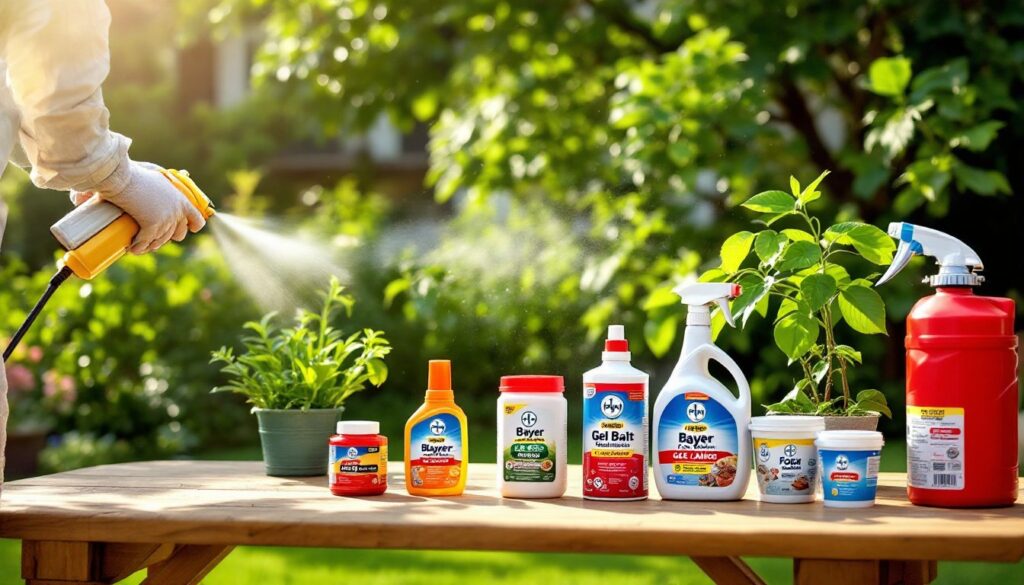
Bayer Advanced Outdoor Insect Spray and Bayer Lawn and Garden Insect Killer are go-to choices for controlling aphids, beetles, caterpillars, and other garden pests on ornamentals and vegetables. Both use pyrethroids (synthetic versions of naturally occurring compounds found in chrysanthemum flowers). These spray formulations typically require mixing with water and application via hand-pump sprayer or garden hose attachment. Coverage depends on pest density and plant size: follow label rates carefully. Note: Some formulations aren’t approved for food crops, so check the label before spraying vegetable gardens.
Bayer Advanced All-in-One Insect Killer Granules work well for soil-dwelling pests like grubs, chinch bugs, and cutworms. You spread them dry on the lawn and water them in: the active ingredient seeps into the soil where pests feed. Timing matters, apply in spring or early summer before peak pest activity. These granules typically cost less per square foot than liquid sprays but require more application labor.
For ant hills and fire ants, Bayer Advanced Fire Ant Killer uses bifenthrin to kill the mound from the inside out. You sprinkle it directly on the mound (wearing gloves), and worker ants carry it back to the colony. One application usually takes care of a single mound, though large infestations may need repeat treatment at different spots across your yard.
Indoor Pest Control Options
Bayer Advantage II is one of the most popular flea treatments for pets and homes. Applied monthly to your dog or cat’s skin (following weight-based dosing), it kills adult fleas and prevents eggs and larvae from developing. It’s a prescription product in some regions, so check availability in your area. Many homeowners swear by it, though some newer alternatives claim faster action.
Bayer Advanced Gel Ant Baits and Bayer Advanced Roach Baits exploit the insect’s natural feeding behavior. Worker ants or roaches eat the bait, return to their nest, and pass the poison to the colony through regurgitation, a process called trophallaxis. Baits are slower than contact sprays (often taking 3–7 days to show full effect) but more targeted and safer around kids and pets if placed correctly. Position baits along ant trails or roach highways, not in high-traffic human areas.
Bayer Advantage Household Fogger addresses whole-room infestations, particularly fleas. You exit the home, activate the fogger, and let it run for the specified time (usually 2–4 hours). The aerosol disperses insecticide throughout the room, killing adult fleas and exposed eggs. Critical: All pets must leave the house, and you’ll need to cover fish tanks and turn off air circulation. After fogging, air out the home for at least 30 minutes before re-entering.
How to Use Bayer Pest Control Safely
Safe application starts before you buy. Read the label completely, not the back, the entire label including the fine print. Note the active ingredient, target pests, approved surfaces, re-entry times, and any restrictions (e.g., “do not use on edible crops”).
Personal Protective Equipment (PPE) is non-negotiable. For sprays, wear chemical-resistant gloves (nitrile isn’t always enough: check the label), eye protection, and a long-sleeved shirt. If mixing concentrate, consider a respirator, not a dust mask, but an actual respirator rated for organic vapors. For granules and baits, gloves and eye protection suffice, but wash your hands thoroughly after application.
Application technique matters. With sprays, apply until foliage is wet but not dripping. Over-application wastes product and increases runoff risk: under-application leaves pests untouched. For lawn treatments, mow first, then apply, then water in if required. Avoid spraying on windy days, drift carries product off-target and wastes it. Never apply to rain-forecasted days: water will wash the product away.
Timing and re-entry. Most Bayer products have a re-entry interval, a waiting period before people or pets can safely return to the treated area. Interior baits may require 2–4 hours: sprayed foliage outdoors typically requires 24 hours before harvest or heavy human contact. Longer intervals reduce risk.
Storage and disposal. Keep all products in original, labeled containers in a cool, dry place away from food and children. Never pour unused product down the drain: contact your local hazardous waste facility for disposal guidance. Empty containers should be rinsed and placed in regular trash, or check local rules.
Precautions around pets and kids. Baits and granules are generally safer than sprays if used correctly. Restrict access to treated areas, use a baby gate or closed door, until the product dries completely. If children or pets ingest product, call Poison Control (1-800-222-1222) or your vet immediately.
Comparing Bayer to Other Pest Control Brands
Bayer isn’t the only player in the DIY pest control market. Brands like Spectracide, Ortho, and Raid offer similar active ingredients at comparable price points. The real differences often come down to formulation, ease of application, and availability.
Bayer vs. Ortho: Both use pyrethroids in garden sprays, but Ortho emphasizes”ready-to-spray” hose-end bottles, while Bayer often requires mixing. Ortho’s convenience appeals to casual users: Bayer’s concentrate-to-water ratio can be more economical for repeat applications. Prices are roughly equivalent, though regional availability varies.
Bayer vs. Raid: Raid focuses heavily on indoor roaches, spiders, and ants. Raid’s aerosol sprays offer instant knockdown, pests die in seconds, whereas Bayer’s gels prioritize long-term colony control. Raid is better for acute infestations: Bayer baits excel at prevention and sustained management.
Professional alternatives: Many homeowners skip DIY products entirely and hire services like Crown Pest Control: Your or local exterminators. Professionals apply stronger formulations, provide guarantees, and handle complex infestations (like termites or bed bugs). Cost is higher, typically $150–500 per visit, but so is the expertise. For severe infestations, professional treatment is often the only reliable option.
When choosing between DIY and professional, ask yourself: Is the infestation recent and localized, or widespread and persistent? Can you safely apply pesticides in your home? Do you have the time to monitor and re-treat? If the answer to any is “no,” calling a pro saves frustration. If you’re dealing with minor ants or a single roach sighting, Bayer products offer a cost-effective starting point. Many pest control options exist for different situations, matching the problem to the solution is key.
For regional-specific guidance, resources like Maryland Pest Control: Effective can help you understand local pest pressure and treatment timing. You can also review flea bomb options and DIY techniques if you’re considering foggers, or check Angi for local contractor reviews and cost estimates if you decide to hire help.
Conclusion
Bayer pest control products offer homeowners a practical, affordable way to tackle common indoor and outdoor infestations. Whether you choose sprays, baits, granules, or foggers depends on your pest type, infestation severity, and comfort level with chemical handling. Always read and follow labels, wear appropriate PPE, and don’t hesitate to call a professional if an infestation spirals beyond your control. With the right approach and realistic expectations, you’ll reclaim your home from unwanted pests.