Table of Contents
ToggleGerman roaches are among the most stubborn household pests, they reproduce quickly, hide in tiny crevices, and develop resistance to standard treatments. Finding the best german roach killer means understanding what actually works and why. This guide walks you through proven german roach control methods, from gel baits to professional-grade sprays, natural alternatives, and the prevention strategies that keep infestations from coming back. Whether you’re dealing with your first sighting or a persistent problem, you’ll find the practical, no-nonsense approach here.
Key Takeaways
- Gel baits are the most effective DIY german roach killer, working over 7–14 days as roaches ingest poison and share it within the colony.
- German roaches reproduce rapidly (30–40 offspring per female every 90 days) and develop resistance to treatments, requiring rotation of active ingredients every 2–3 months.
- Combining bait stations with residual sprays along baseboards and behind appliances creates a comprehensive treatment approach that delivers faster results than either method alone.
- Prevention through food control, water leak repair, and crack sealing is essential to stop re-infestations after treatment succeeds.
- Call professional pest control if DIY treatment fails after 8+ weeks, roaches appear during the day, or the problem spans multiple rooms.
Understanding German Roaches and Why They’re Hard to Eliminate
German cockroaches are smaller than their American cousins, typically ½ to ⅝ inch long, and tan to light brown in color. What makes them a nightmare isn’t their size: it’s their breeding speed and survival instinct. A single female can produce 30 to 40 offspring every 90 days, meaning a small problem becomes a big one in weeks.
They hide in cracks no wider than a credit card, behind baseboards, inside appliances, and within wall voids where DIY treatments struggle to reach. They’re also nocturnal, staying hidden during the day and foraging for food and water at night. Heat, moisture, and food scraps are their holy trinity, kitchens and bathrooms are prime real estate.
Resistance is another factor. German roaches exposed to the same insecticide repeatedly can develop immunity. This is why rotation between product types and active ingredients matters. Professionals and persistent DIYers succeed by treating the entire problem, not just spraying surfaces, and keeping up consistent pressure over weeks, not days.
Top Chemical Roach Killers That Actually Work
Gel Baits and Spray Insecticides
Gel baits are the most effective DIY tool for german roach control. Products like Advion Gel Bait (containing indoxacarb) and Maxforce FC Gel (fipronil) work by poison delivery, roaches eat the bait, share it with others through feces and contact, and the colony collapses over 7–14 days. Place bait stations in corners, under sinks, near appliance hinges, and along baseboards where roaches travel.
Key advantage: baits target the actual problem (food-foraging roaches) rather than just surface spray. Use a small, pea-sized drop per station: more bait doesn’t work faster and wastes product. Reapply every 2–4 weeks or when baits dry out.
Pest control experts recommend gel baits paired with targeted sprays for faster knockdown. Residual spray insecticides like Cy-Kick CS (cyfluthrin) or Temprid SC (imidacloprid and cyfluthrin) are applied to baseboards, crown molding, and behind appliances. These create a treated perimeter that kills roaches on contact.
Always wear nitrile gloves and goggles when mixing and applying sprays. Ventilate the area well, keep pets and children away until dry, and follow label instructions exactly, overdoing it doesn’t speed results and creates safety risks. Rotate active ingredients every 2–3 months to prevent resistance buildup.
Natural and Safer Roach Control Alternatives
Not everyone wants synthetic insecticides in their home. Diatomaceous earth (DE), specifically food-grade DE, works as a mechanical killer. This fine powder damages roach exoskeletons on contact, causing dehydration. Dust it lightly along baseboards, behind appliances, and in cabinet corners. The catch: it’s slower than chemical baits and only works where roaches crawl. Moisture kills DE’s effectiveness, so reapply after cleaning or humidity spikes.
Boric acid powder was once the go-to, but it’s largely fallen out of favor because it’s toxic to pets and children if ingested. If you choose boric acid, apply thin lines only in wall voids and inaccessible areas, never where kids or pets can reach.
Essential oils like peppermint and tea tree have roach-repellent properties, but they don’t kill. They might reduce infestations if combined with baits or traps, but aren’t standalone solutions. Some DIYers mix a few drops with water and spray cracks, more as a deterrent than a treatment.
Home organization and preventive maintenance also cut roach pressure. Remove food debris, fix water leaks, seal cracks with caulk, and don’t leave pet food out overnight. These don’t replace active treatment but support it.
DIY Treatment Strategies for Maximum Effectiveness
Killing german roaches DIY means treating smart, not harder. Here’s the playbook:
Step 1: Inspect and Identify Hot Spots
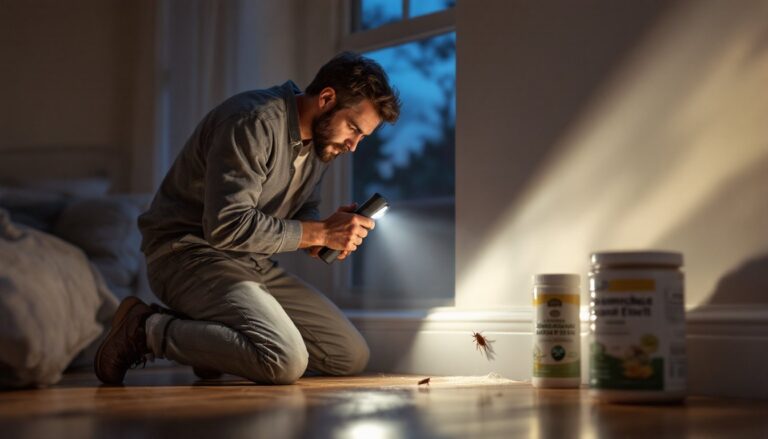
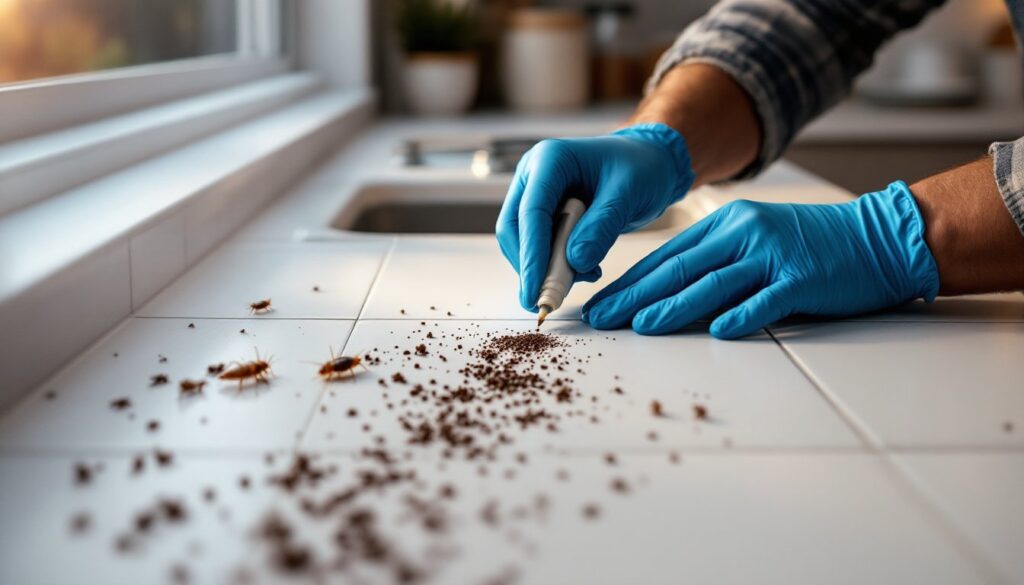
Use a flashlight to scan under sinks, inside cabinet bases, behind the stove and refrigerator, around pipes, and where wall molding meets floors. Look for dark droppings (resembling ground pepper), shed skins, or live roaches. Mark these spots, they’re your treatment zones.
Step 2: Prep the Space
Move items away from baseboards and appliances. Remove clutter where roaches hide. Don’t deep-clean yet: light vacuuming is fine, but avoid removing roach droppings immediately (they signal infestation severity).
Step 3: Apply Baits First
Place gel bait stations every 3–4 feet along baseboards and under appliances. Use a toothpick to apply pea-sized dots into cracks or on bait stations. This is the cornerstone of your treatment.
Step 4: Add Perimeter Spray (Optional)
If using spray insecticide, apply a light band (about 6 inches wide) along baseboards and behind appliances 24 hours after baiting. Don’t oversaturate: a thin, even coat works best. Wear a respirator mask (N95 minimum), gloves, and goggles.
Step 5: Monitor and Rotate
Inspect baits weekly for consumption. Dead or dying roaches may appear over 5–7 days. Reapply baits every 4 weeks until no activity is seen for 4 weeks. Switch to a different active ingredient if numbers plateau, signaling resistance.
Timing matters: treat in the evening when roaches forage, and avoid disturbing baits for at least 48 hours.
Prevention Tips to Keep German Roaches From Returning
Once you’ve eliminated the infestation, prevention is cheaper than re-treatment. German roaches need three things: food, water, and shelter. Eliminate these and they move on.
Food Control
Don’t leave dirty dishes in the sink overnight. Wipe crumbs off counters, clean under the refrigerator, and seal pantry items in airtight containers. Take garbage out daily, and don’t leave pet food out for extended periods.
Water Management
Fix leaky faucets, pipes, and drains immediately. Roaches can survive weeks without food but only days without water. Wipe sinks and counter edges dry before bed. Check under sinks regularly for moisture and mold.
Shelter Reduction
Seal cracks and gaps in baseboards, around pipes, and where cabinets meet walls using paintable caulk or expanding foam. This doesn’t just prevent roaches: it also saves energy and keeps other pests out. Cover gaps around electrical outlets with foam gaskets ($2–3 per pack).
Ongoing Monitoring
Stay vigilant. One roach can restart an infestation. Keep gel bait stations as permanent fixtures in high-risk areas (kitchen, bathrooms) for early detection. Replace them annually or if they dry out. Effective german roach killer to prevent return infestations.
When to Call Professional Pest Control Experts
DIY works for early infestations or small, isolated issues. But call a professional if: you’ve treated for 8+ weeks with no improvement: roaches are visible in daytime: the problem spans multiple rooms or units (apartments): or you have safety concerns about applying chemicals yourself.
Professionals have access to stronger formulations (like prescription-strength baits and aerosol treatments), equipment to treat wall voids and hidden spaces, and experience with resistance patterns in your area. They also monitor your space and rotate treatments systematically, something DIYers sometimes skip.
Expect to pay $150–$500 for an initial treatment and $100–$200 per follow-up visit. Multiple visits (typically 2–4 weeks apart) are standard. It’s more expensive than DIY but faster and often guaranteed. Many exterminators offer service warranties: if roaches return within 30 or 60 days, they retreat at no charge.
If you’re a renter, contact your landlord immediately. In most jurisdictions, pest control is the property owner’s legal responsibility, not yours.