Table of Contents
ToggleBoric acid has been a trusted pest control solution for decades, and it remains one of the most cost-effective options available today. If you’re dealing with roaches, ants, or silverfish in your home, boric acid offers a straightforward way to tackle the problem without very costly or calling in professionals. Unlike some modern synthetic pesticides, boric acid works slowly but persistently, it disrupts the insect’s digestive and nervous systems, making it particularly effective for persistent indoor pests. This guide walks you through what boric acid is, how to use it safely, and why it still holds up against newer pest control methods in 2026.
Key Takeaways
- Boric acid pest control is a cost-effective, low-toxicity solution for roaches, ants, and silverfish that works by disrupting insect digestive and nervous systems over several days.
- Boric acid spreads within pest colonies before insects die, creating a cascading effect that eliminates entire populations—an advantage over fast-acting contact sprays.
- Always use protective equipment (gloves, glasses, N95 mask) when applying boric acid, place baits in enclosed stations away from children and pets, and store in sealed containers.
- Boric acid persists for months in dry conditions and costs significantly less than professional pest control services ($200–$500 per visit), delivering 80% of results at a fraction of the price.
- Unlike diatomaceous earth, boric acid is more selective and won’t harm beneficial insects, making it a targeted option for household pest infestations.
- Boric acid works best as part of an integrated pest management strategy that combines chemical treatment with sanitation, exclusion, and entry-point sealing.
What Is Boric Acid and Why It Works for Pest Control
Boric acid is a naturally occurring compound derived from boron, commonly mined and refined for industrial and residential use. In pest control, it works as both a contact poison and a stomach poison, pests pick it up on their legs or bodies, groom themselves, and ingest it, leading to dehydration and eventual death. What makes boric acid effective is its low toxicity to humans and pets at the small quantities used in home applications, combined with its proven track record against hard-to-kill insects.
The compound disrupts the insect’s metabolism and nervous system over several days. This slower action is actually a strength: pests return to their nests or colonies and spread the poison to others before dying, creating a cascading effect that can eliminate an entire population. Unlike contact sprays that kill on impact, boric acid persists in cracks, crevices, and hidden spaces where roaches and ants nest, providing long-term suppression. Homeowners appreciate boric acid because it remains active for months when kept dry, and it doesn’t leave sticky residues or unpleasant odors common to other treatments.
Best Pests to Target With Boric Acid
Boric acid excels against specific household pests but isn’t a one-size-fits-all solution. It works best on insects with habits that expose them to the powder repeatedly and allow them to groom themselves, that’s why it’s particularly effective indoors where pests navigate tight spaces daily.
How to Apply Boric Acid Safely in Your Home
Proper application is the difference between a successful treatment and wasted effort. Boric acid only works where pests travel, so placement and technique matter as much as the product itself.
Safety Precautions Every Homeowner Should Know
Boric acid is considered low-toxicity to humans and pets when used as directed, but it’s not harmless. Acute toxicity occurs at much higher doses than those found in a typical home treatment, but chronic exposure or accidental ingestion poses risks, especially for small children and pets.
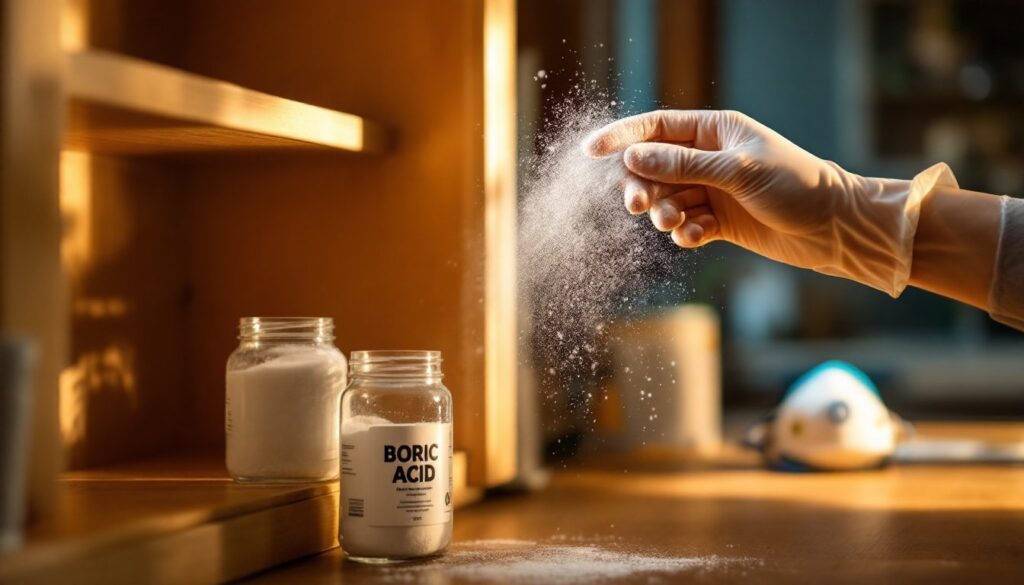
Always wear nitrile gloves, safety glasses, and an N95 dust mask when applying boric acid powder. Don’t apply it in areas where children or pets play, eat, or sleep frequently. If you use boric acid baits, place them in bait stations (enclosed containers that allow pests in but prevent pets and kids from accessing the poison directly) or in wall voids and cabinet interiors where they’re inaccessible. Label all containers clearly and store boric acid in a sealed container in a cool, dry place away from food.
Wash your hands thoroughly after application. If boric acid is ingested, which is rare but possible with young children, contact poison control immediately. Symptoms of boric acid poisoning include nausea, vomiting, and diarrhea. The good news: boric acid breaks down in the body relatively quickly and doesn’t accumulate over time like some pesticides.
Don’t apply boric acid near food preparation surfaces, and avoid breathing the dust during application. Proper ventilation and protective equipment reduce any risk to negligible levels. Many homeowners use boric acid for years without incident because they treat it with respect and follow application guidelines. If anyone in your home has severe chemical sensitivities, consult a physician before use.
Comparing Boric Acid to Other Pest Control Methods
Boric acid isn’t the only tool in the pest control toolbox, and understanding how it stacks up against alternatives helps you make an informed choice for your situation.
Commercial spray insecticides (pyrethroids, neonicotinoids) work faster, killing pests on contact, but they require repeated applications and can leave chemical residues. They’re stronger than boric acid but also more toxic to humans at higher concentrations. Boric acid, by contrast, works slowly but lasts longer once dry, making it ideal for persistent, low-level infestations. Good Housekeeping regularly tests pest control products, and boric acid consistently ranks as a budget-friendly option with solid long-term results.
Diatomaceous earth (food-grade) is another low-toxicity powder that works similarly to boric acid, it damages insect exoskeletons, causing dehydration. It’s less toxic than boric acid but also less targeted: it kills beneficial insects like ladybugs and bees, whereas boric acid is more selective. Diatomaceous earth loses effectiveness when wet, just like boric acid, but it’s slightly bulkier and harder to apply in fine cracks.
Professional pest control services offer comprehensive treatments using licensed applicators and stronger chemicals not available to homeowners. They’re effective but costly, typically running $200–$500 per visit. For mild to moderate infestations, boric acid offers 80% of the results at a fraction of the cost.
Integrated Pest Management (IPM) combines multiple strategies: sanitation, exclusion, and targeted chemical use. Boric acid fits perfectly into an IPM approach, it’s not a standalone solution but a component of a broader strategy. Some homeowners in areas like Maryland with regional pest challenges find boric acid most effective when paired with sealing entry points and reducing food sources. The bottom line: boric acid works best for roaches, ants, and silverfish in homes where you’re willing to accept slower results in exchange for safety and cost savings.