
Table of Contents
ToggleWashington, DC’s humid summers, aging row houses, and proximity to natural areas create a perfect storm for pest problems. Whether it’s German cockroaches slipping through basement cracks, carpenter ants weakening wooden joists, or termites silently eating away at structural integrity, DC homeowners face year-round pest pressure. The good news? Most infestations start small and spread slowly, you’ve got a window to act. This guide walks you through identifying DC’s most common pests, hardening your home against them, tackling minor problems yourself, and knowing when to call in the professionals for Washington DC pest control.
Key Takeaways
- DC’s humid climate and aging row houses create year-round pest pressure, but most infestations start small, giving homeowners a window to take action.
- Sealing entry points, managing moisture, and removing clutter are the most effective DC pest control prevention strategies, accounting for 80% of pest management success.
- German cockroaches, termites, and carpenter ants are DC’s most common pests, and early identification allows homeowners to address minor problems with DIY methods like gel baits and snap traps.
- Termite infestations, extensive rodent or cockroach problems, and bed bugs in multi-unit buildings require professional pest control services, which typically cost $150–$1,500 in the DC area.
- Licensed pest control companies in Washington, DC should be selected based on DC Department of Energy and Environment certification, warranties, and neighborhood recommendations rather than cost alone.
Common Pests in Washington, DC and Why They Thrive Here
DC’s climate and building stock make it a haven for several pest species. The area’s hot, humid summers (often 85–95°F with 60–70% humidity) attract moisture-loving pests like cockroaches, silverfish, and centipedes. The region’s mixed landscape of old brick row houses, wooden renovation projects, and nearby parks means termites and carpenter ants find plenty of food and shelter.
German cockroaches are the most common indoor pest in DC. They breed rapidly in warm, damp environments, kitchen cabinets, behind appliances, and under sinks are prime real estate. A single female can produce dozens of offspring in weeks.
Subterranean termites are the real threat to older DC homes. They live in soil, travel up through wood-to-soil contact points, and can silently consume framing, joists, and subflooring for years before visible damage appears. A single colony can contain hundreds of thousands of workers.
Carpenter ants hollow out wood to nest but don’t eat it like termites do. They’re attracted to moisture-damaged wood, common in DC basements after heavy rains or where downspouts drain directly against foundations.
Rodents (mice and rats) seek warm shelter in fall and winter. They squeeze through gaps as small as a dime (mice) or quarter (rats), leaving droppings, chewing through wiring and insulation, and creating fire hazards.
Other regular visitors include bed bugs (hitchhiking on luggage and used furniture), house flies (breeding in trash and organic debris), and stink bugs (seeking winter shelter in attics and wall cavities). Summer brings mosquitoes breeding in standing water, gutters, planters, bird baths.
Prevention Strategies Every DC Homeowner Should Know
Prevention is 80% of pest control. A tight, dry home starves pests of shelter and water.
Sealing Entry Points and Reducing Moisture
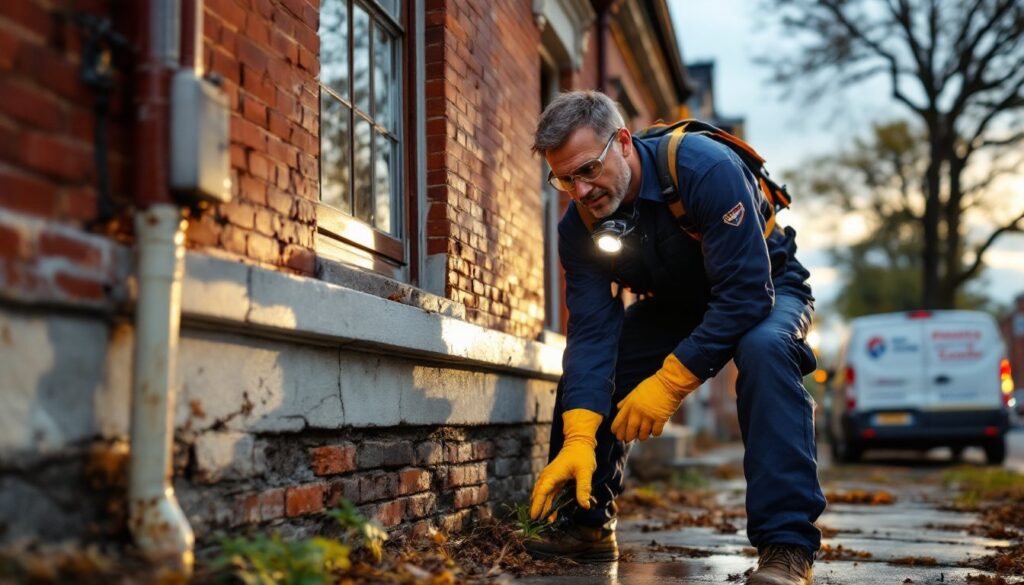
Walk your home’s exterior with a flashlight and look for gaps. Check where pipes, electrical conduits, and cables enter walls, these are common pest highways. Seal openings with silicone caulk (paintable, flexible, and durable) or expanding polyurethane foam for larger gaps. Trim back tree branches and vegetation 2–3 feet from your roof and siding: pests use vegetation as bridges.
Moisture is pest fuel. Fix dripping pipes immediately, a slow leak under a sink or in a crawlspace creates ideal conditions for termites and roaches. Install or repair gutters so water drains at least 4–6 feet away from the foundation. In basements, consider a dehumidifier if humidity creeps above 60%: aim for 30–50% relative humidity year-round.
Declutter storage areas. Pests hide in stacked boxes, old newspapers, and fabric piles. Use sealed plastic containers instead, and keep them elevated off the floor (even a 6-inch gap helps). Don’t store firewood against the house: keep it at least 20 feet away and elevated on a rack.
Inspect wooden elements touching soil: deck posts, fence rails, basement sill plates, and door frames. These are termite entry zones. Where wood must contact soil, install a metal termite shield (a thin metal flashing that forces termites out into the open, where you can see them). If you’re rebuilding a deck, use pressure-treated lumber or composite materials that termites can’t digest.
Store food in airtight containers, not open boxes. Clean up crumbs immediately, even tiny debris feeds cockroaches and attracts mice. Take garbage out frequently, especially in warm months.
DIY Pest Control Methods That Work in DC Homes
Minor pest problems, a few roaches, a single mouse, some flies, can often be handled without a professional. Catch infestations early.
For cockroaches: Use gel baits (brands like Combat Max or Advion work well) placed along baseboards, under sinks, and behind appliances. These baits are less toxic than sprays and the roaches carry poison back to the nest. Replace baits monthly. Sticky traps help you monitor if baits are working. Combine baits with caulking (to eliminate hiding spots) and cleaning (remove grease and food residue with a degreaser). Wear nitrile gloves when handling baits.
For rodents: Snap traps or electronic traps placed perpendicular to walls (mice travel along edges) work better than poison bait, which causes dead rodents inside walls. Peanut butter or dried fruit are good baits. Check traps daily. Wear disposable gloves and a mask when handling dead rodents: dispose of them in sealed bags in the trash. Live traps are humane but require you to relocate animals far from your home, check local regulations.
For carpenter ants: Locate the nest (you may see sawdust-like frass near entry holes). Inject boric acid powder or a commercial ant dust into galleries using a caulking gun and tubes designed for the purpose. Wear safety glasses and gloves. Treat in evening when ants are less active. Repeat every 2–3 days for a week. Remove the source of moisture (fix the leak that attracted them).
For termites: If you catch early signs (mud tubes on foundation, soft wood, or wings shed near windows), do not treat it yourself. Termites require professional inspection and usually a perimeter treatment. DIY spot treatments rarely reach the entire colony.
For bed bugs: Wash all bedding, pillows, and clothes in hot water, then dry on high heat. Vacuum mattresses, box springs, and surrounding areas thoroughly. Seal cracks in headboards and nightstands. Use mattress encasements (zippered covers) to trap bugs already inside. Steam cleaning (at 130°F+) kills all life stages. If DIY efforts fail after 2 weeks, call a professional: bed bugs are notoriously hard to eliminate alone.
General supplies: Stock safety glasses, nitrile gloves, N95 masks (for dust and fumes), boric acid powder, gel baits, snap traps, sticky traps, silicone caulk, flashlight, and a caulking gun. Most of these are available at hardware stores under $50 total.
When to Call a Professional Pest Control Service
Some pest problems demand a professional. Know when to raise the white flag.
Termite infestations require professional diagnosis and treatment. A termite colony can include hundreds of thousands of workers, and DIY spot treatments won’t reach the nest. Professionals use bait stations (installed in the ground around your foundation) that workers carry back to the queen, eventually collapsing the colony. A full perimeter treatment typically costs $500–$1,500 in the DC area, depending on home size and severity. Many pest control companies offer annual inspections and warranties, a $100–$200 yearly investment that catches problems early.
Extensive cockroach or rodent infestations (multiple rooms, sustained populations even though DIY efforts) need professional treatment. Pest control specialists have access to stronger formulations and can apply them in walls, attics, and crawlspaces where you can’t reach. Services often include multiple visits over 4–6 weeks and ongoing monitoring.
Bed bug infestations in apartments or multi-unit buildings require coordinated professional treatment: the bugs will migrate between units if only one is treated. Heat treatment (raising the entire home to 120–130°F for several hours) is highly effective but requires professional equipment. Chemical treatments over multiple visits are the standard alternative.
Structural damage from pests (visible termite galleries, extensive carpenter ant excavation, or rodent gnaw marks on electrical wiring) indicates you need both a pest control professional and potentially a structural engineer or contractor. Damage to load-bearing joists or wall framing is a safety issue and may require permit work. Seek estimates from multiple providers, according to HomeAdvisor, pest control costs vary widely by service type and region.
When choosing a professional, look for companies licensed by the DC Department of Energy and Environment and ask about their warranty. Many offer seasonal plans (treating in spring and fall, when activity peaks) rather than ongoing service. Check reviews on local directories like Angi and ask neighbors for recommendations, word of mouth is gold in DC.
Timing matters too. Call a professional as soon as you see signs: mud tubes on the foundation, frass (termite droppings), dead insects, or gnaw marks. The longer an infestation sits, the more costly and time-consuming the fix.
Conclusion
DC pest control isn’t a one-time fix, it’s ongoing home maintenance. Seal gaps, manage moisture, keep your home clean and clutter-free, and monitor for early signs. Tackle small problems yourself when you’re confident, but don’t waste time and money fighting a losing battle. A professional inspection from a licensed pest control company in Washington, DC costs $150–$300 and often catches issues you’d miss. Paired with smart prevention, professional help keeps your home pest-free and your structure sound for years to come.